
Embroidery vs. Printing: Which Is Better for Company Polos?

Updated: Aug 18
Polos are one of the most common choices for company uniforms, sales teams, office staff, trade shows, and customer-facing employees.
Once you choose the polo itself, the next question is how the logo should be applied.
For most businesses, that decision comes down to embroidery vs. printing.
Both can work well, but they create very different looks and are better suited for different types of logos, garments, and work environments.
What Is Embroidery?
Embroidery uses thread to stitch a logo directly into the garment.
It is commonly used on:
Polos
Jackets
Quarter-zips
Hats
Work shirts
Corporate apparel
Embroidery creates a textured, dimensional appearance and is often associated with professional uniforms and higher-end branded apparel.
For a traditional left-chest company logo, embroidery is one of the most common decoration methods.
What Is Printed Decoration?
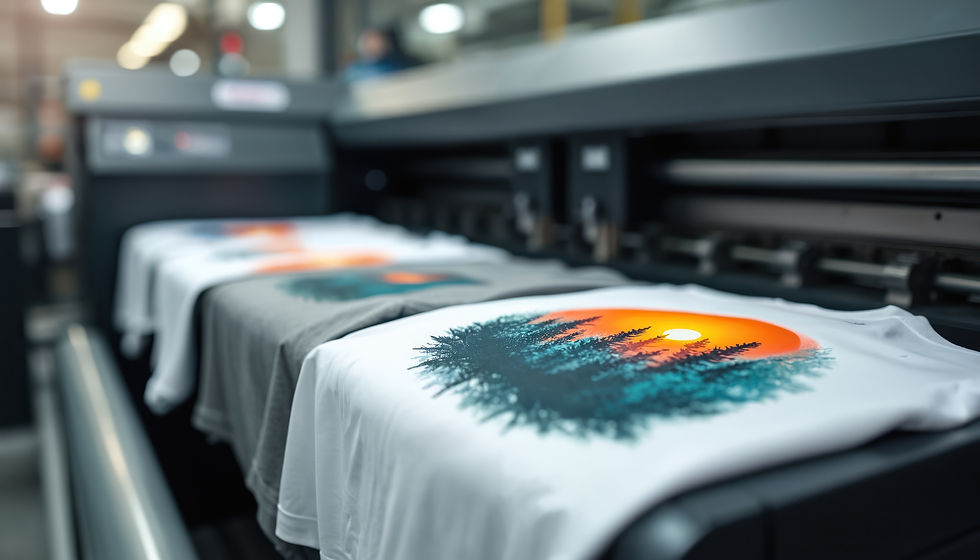
Printed decoration applies artwork to the surface of the garment rather than stitching it into the fabric.
Depending on the project, this may include methods such as DTF printing or other heat-applied decoration.
Printing works especially well when a logo contains:
Many colors
Gradients
Fine details
Small text
Complex artwork
It can also be useful when embroidery would make the design too thick, heavy, or difficult to reproduce.
Embroidery vs. Printing: The Biggest Difference
The biggest difference is appearance.
Embroidery produces a textured and dimensional logo.
Printing produces a smooth graphic appearance.
Neither is automatically better.
The right choice depends on the image your company wants to create and the type of garment being decorated.
When Embroidery Looks Best
Embroidery is usually a strong choice when the goal is a polished, professional appearance.
It works particularly well for:
Sales teams
Office staff
Managers
Customer-facing employees
Corporate uniforms
Trade shows
Hospitality teams
Professional services
A small embroidered logo on the left chest of a polo creates a clean appearance without overwhelming the garment.
For many companies, this is the classic uniform look.
When Printing Makes More Sense
Printing may be a better option when the artwork is too complicated for embroidery or when the desired look is more graphic.
Printing can work especially well for:
Full-color logos
Detailed illustrations
Gradients
Large designs
Back logos
Sleeve decoration
Promotional polos
It may also be appropriate when the company wants the same artwork reproduced consistently across T-shirts, polos, hoodies, and other apparel.
Which Is Better for Detailed Logos?
Printing generally provides more flexibility for very detailed artwork.
Embroidery requires artwork to be translated into stitches.
Very small details may need to be simplified during a process known as digitizing.
Elements that can be difficult to embroider include:
Extremely small text
Thin lines
Tiny shapes
Fine gradients
Photographic elements
A printed logo can often reproduce those elements more accurately.
If your company logo is highly detailed, it may be worth comparing both options before choosing embroidery.
Which Looks More Professional?
For a traditional business polo, embroidery is often perceived as the more premium option.
The stitched texture creates depth and gives the garment a finished uniform appearance.
This is one reason embroidery is commonly used by:
Contractors
Financial companies
Real estate firms
Sales organizations
Hospitality companies
Professional services
Automotive businesses
Corporate teams
However, professionalism depends on execution.
A poorly sized or overly large embroidered logo can look worse than a clean printed logo.
The decoration should fit the garment and the brand.
How Large Should an Embroidered Polo Logo Be?
Most company polo embroidery is placed on the left chest.
The logo should be large enough to be recognizable without dominating the shirt.
Exact dimensions depend on the shape of the artwork.
A wide horizontal logo may need different dimensions than a square or circular logo.
In general, the goal should be:
Visible, balanced, and proportional to the garment.
Oversizing embroidery can make the polo uncomfortable and may cause the fabric to pull or wrinkle around the design.
Does Embroidery Cost More Than Printing?
It can.
Embroidery pricing is often influenced by:
Stitch count
Logo size
Quantity
Garment type
Number of decoration locations
Artwork complexity
A larger embroidered design requires more thread and more machine time.
Printing pricing may instead be affected by factors such as:
Print size
Quantity
Number of print locations
Garment type
Production method
For a small left-chest company logo, embroidery can be very cost-effective.
For a very large or highly detailed design, printing may make more financial sense.
What Is Stitch Count?
Stitch count is the approximate number of stitches required to reproduce an embroidered design.
More complex or larger logos usually require more stitches.
For example, a simple company name may require relatively few stitches.
A detailed crest or large multicolor logo may require significantly more.
Higher stitch counts generally require more production time, which can affect price.
What Is Embroidery Digitizing?
Before a logo can be embroidered, the artwork must be converted into instructions that tell the embroidery machine how to stitch the design.
This process is called digitizing.
Digitizing determines:
Stitch direction
Stitch density
Thread sequence
Underlay
Color changes
How different parts of the logo overlap
Good digitizing has a major impact on the finished result.
Simply converting an image into an embroidery file automatically does not always produce professional results.
Does Embroidery Last Longer?
Embroidery is extremely durable when produced correctly.
Because the design is stitched directly into the garment, it can withstand repeated washing and regular wear.
This makes embroidery particularly attractive for employee uniforms that will be worn frequently.
Printed decorations can also be highly durable when produced properly.
The final lifespan of either method depends on:
Material quality
Production quality
Garment fabric
Washing habits
Dryer temperature
Work environment
For normal business use, both methods can provide long-lasting results.
Is Embroidery Good for Performance Polos?
Usually, but the garment should be evaluated first.
Performance polos often use lightweight polyester fabrics.
Dense embroidery can sometimes pull or distort lighter fabrics if the design is too large or stitch-heavy.
A properly sized left-chest logo is generally much easier to manage.
For extremely lightweight fabrics, printing may sometimes create a cleaner result.
The garment and decoration method should always be considered together.
What About Moisture-Wicking Polos?
Moisture-wicking polos are popular for:
Field sales
Outdoor employees
Golf outings
Hospitality
Trade shows
Technicians
Summer uniforms
Both embroidery and printing can work on many performance fabrics.
The right choice depends on the fabric construction and logo.
If the company wants a classic professional appearance, embroidery is usually a strong starting point.
Can You Print on the Back of a Polo and Embroider the Front?
Yes.
Businesses do not necessarily have to choose only one decoration method.
A polo might include:
Left chest: Embroidered company logo
Back: Printed website or large graphic
Sleeve: Additional branding
This combination can work especially well for service businesses where employees need a professional front appearance while still displaying larger branding from a distance.
Should Every Company Polo Be Embroidered?
Not necessarily.
Embroidery is common, but the decision should be based on how the polo is being used.
Embroidery Is Often Best For:
Professional uniforms
Sales teams
Managers
Office staff
Customer-facing roles
Premium branded apparel
Printing May Be Better For:
Highly detailed logos
Large designs
Full-color artwork
Promotional apparel
Back decoration
Designs with gradients
The best solution may even involve both methods.
What About Multiple Logo Colors?
Embroidery can reproduce multiple thread colors very effectively.
However, additional artwork complexity can increase production time.
Printing can also reproduce many colors, especially when using digital decoration methods.
If your brand has a complex multicolor logo, it is worth reviewing both an embroidered and printed version before standardizing your uniforms.
Which Method Is Better for Large Employee Orders?
Quantity alone should not determine the decoration method.
For a large order of polos with a simple left-chest logo, embroidery can be extremely practical.
For a large order with complex full-color graphics, printing may provide more flexibility.
The decision should consider:
Quantity
Garment
Logo complexity
Placement
Budget
Desired appearance
Consider the Employee's Job
The decoration method should match the employee's role.
Sales and Office Employees
Embroidery often creates the polished appearance these roles need.
Field Technicians
Either method can work depending on the garment and branding.
Construction and Trade Employees
Durability and visibility may matter more than a premium corporate appearance.
Event Staff
Printed polos may work well when larger branding is needed.
Uniform decisions should be practical as well as visual.
What About Jackets and Quarter-Zips?
The same principles generally apply.
Embroidery works particularly well on:
Soft-shell jackets
Fleece
Quarter-zips
Vests
Work jackets
These garments are commonly used as premium company apparel.
Printing may make sense for certain lightweight garments or larger artwork.
Ask for a Sample Before a Large Order
If you are unsure which method to choose, compare samples.
Look at:
Logo size
Color accuracy
Fabric appearance
Feel
Placement
Overall professionalism
For a large uniform program, seeing the finished decoration on the actual garment can prevent costly mistakes.
Embroidery vs. Printing for Company Polos: Which Should You Choose?
For most traditional company polos, embroidery is a strong default choice, particularly for small left-chest logos and professional uniforms.
Printing may be better when the artwork contains complex detail, gradients, large graphics, or design elements that do not translate well into stitches.
The best decoration method depends on:
The polo
The logo
The employee's role
The size and placement of the design
The desired appearance
The order quantity
The budget
A good apparel provider should evaluate all of those factors before recommending a production method.
Compare Custom Polo Options
FTF Design Co. helps businesses select polos and decoration methods based on how the apparel will actually be used.
Whether you need embroidered polos for a sales team, performance polos for field employees, or printed company apparel with detailed branding, we can help compare garment options, decoration methods, quantities, and pricing.
Use our custom apparel pricing calculator or request an exact quote for your company apparel order.


Comments